Illegal, unreported and unregulated (IUU) fishing is a serious problem in ocean fisheries worldwide, and the Western and Central Pacific Ocean (WCPO) — home to the world’s largest tuna fishery — is no exception.
But when it comes to reporting on its scale and impact, accuracy matters enormously. Inflated or misleading estimates do a disservice to those working to help ensure WCPO tuna fisheries are managed sustainably and can distract from efforts to address key drivers of IUU fishing. Two major studies by the Marine Resources Assessment Group (MRAG), published in 2016 and 2021, provide the most rigorous assessment of IUU activity in this region. Understanding what those studies actually say — and what they do not — is essential.
Unpacking the Numbers: What the MRAG Studies Found
The 2021 MRAG report represented a significant refinement over its 2016 predecessor, employing a more rigorous “bottom-up” methodology and drawing on more reliable data sources. Its headline finding was striking: Overall IUU-implicated fishing in the region was estimated at 184,000–201,000 tonnes, with a catch value of US$312–358 million. This was substantially lower than the 2016 report’s estimate of 277,000–338,000 tonnes valued at US$616–740 million.
Despite these findings, older and superseded figures continue to circulate widely. Recent reporting has cited estimates of illegal fishing impacts that bear little relation to the best available science. While such figures may attract attention, they can also distort public understanding of the scale and nature of IUU activity. Effective policy discussions depend on using the most current and rigorous assessments available.
Catch Value Is Not the Same as Revenue Loss
A fundamental error in many media reports is conflating the estimated value of IUU catch with revenue losses for Pacific Island governments. These are very different things. Governments collect licence fees, and, in the WCPO region, these are almost universally based on fishing days, not on catch volumes or values. A vessel catching fish illegally therefore does not automatically translate into a dollar-for-dollar loss for a Pacific Island government.
A more meaningful indicator is the economic rent associated with IUU activity, which the 2021 MRAG study estimated at approximately US$43 million. Even this figure may overstate actual government losses given the structure of licensing arrangements. But it is a far cry from the hundreds of millions routinely cited in the popular press.
Breaking Down the IUU Categories
The 2021 MRAG report disaggregates IUU activity into four risk categories: unlicensed or unauthorised fishing; misreporting; non-compliance with licence conditions (such as shark finning); and post-harvest risks such as illegal transhipping. Only the first category — unlicensed fishing — results in a direct revenue loss to Pacific Island states. Crucially, this category was estimated to account for just 5% of total IUU-implicated activity, representing a direct monetary impact of approximately US$15–18 million across the entire region.
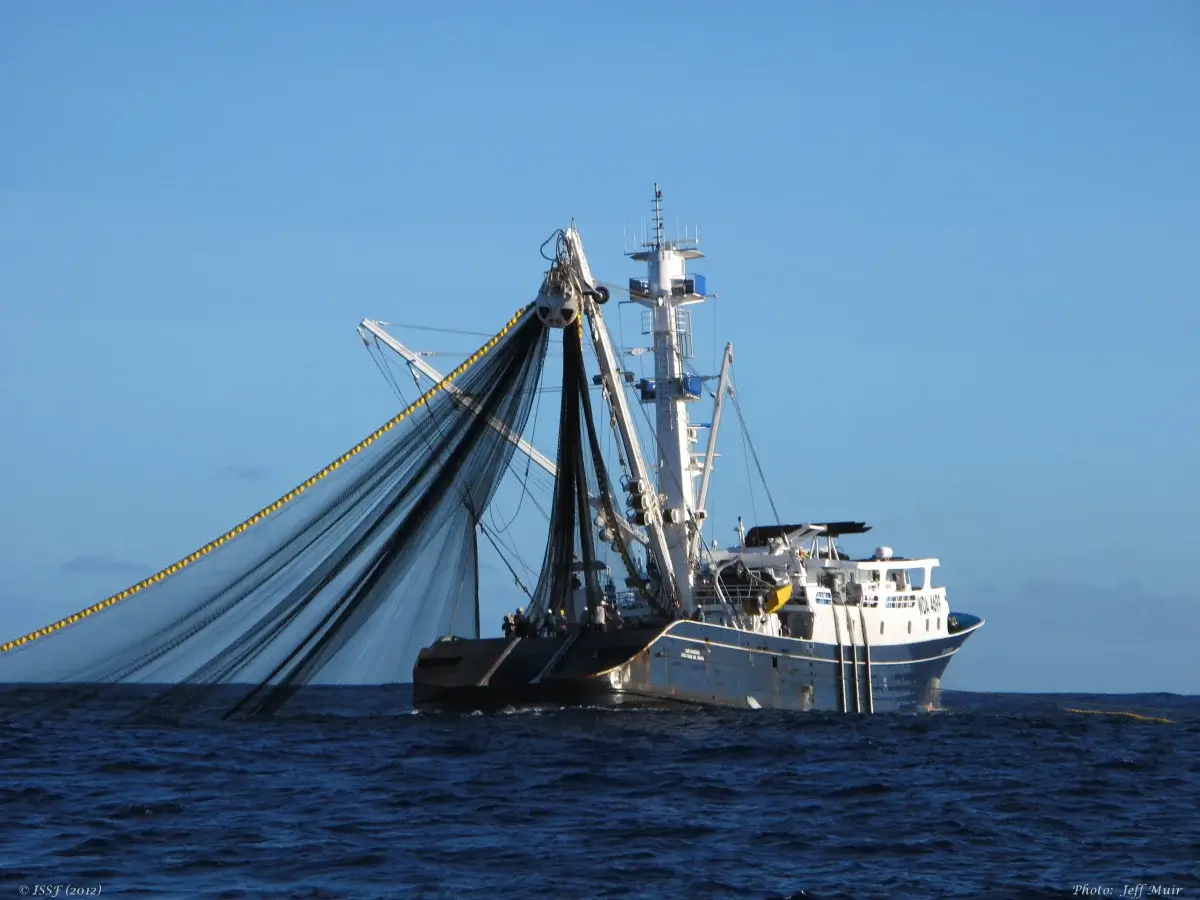
The largest single component, accounting for around 72% of IUU-implicated catch, was misreporting in the purse seine sector. The WCPO purse seine fishery operates under 100% observer coverage — among other monitoring, control, and surveillance (MCS) regulations — and the reported anomalies generally arise from inherent imprecision in estimating brail weights and species composition at sea, well-known limitations that are routinely corrected using observer sampling data. Classifying these estimation differences as “IUU” misrepresents the nature and scope of the problem.
For longline vessels, the picture is quite different: Fish are individually handled and so catches should be accurately reported. However, observer coverage is limited for longliners (WCPFC requires a minimum of 5%), and the MRAG report noted that there is persistent underreporting of bigeye and billfish catches in particular, pointing to the need for further scrutiny.
Progress Made, Vigilance Required
None of this is to suggest that IUU fishing is not a real concern. It is — and Pacific Island nations have profound economic and social stakes in the health of their tuna resources. The risks that existed when 200-mile exclusive economic zones were first declared have, however, been substantially moderated by decades of investment in monitoring, control and surveillance. Regional bodies including the Forum Fisheries Agency, the Parties to the Nauru Agreement, and the Western and Central Pacific Fisheries Commission have built increasingly robust observer programmes, vessel monitoring systems, data collection and reporting infrastructures, and at-sea surveillance operation – all of which strengthen the transparency and accountability of the fishery.
Continued vigilance is essential — and so is communicating honestly about the challenges that remain. Exaggerated or outdated statistics may attract attention and headlines, but they ultimately undermine the credibility of the very institutions and advocates working hardest to protect Pacific tuna resources. The integrity of the fishery depends not only on the actions of those on the water, but on the quality of the information that shapes policy onshore.
Dr. John Hampton is a fisheries scientist with more than four decades of experience in Pacific tuna fisheries science and management. He served as Chief Fisheries Scientist at the Pacific Community (SPC) and was a long-time member of the ISSF Scientific Advisory Committee.