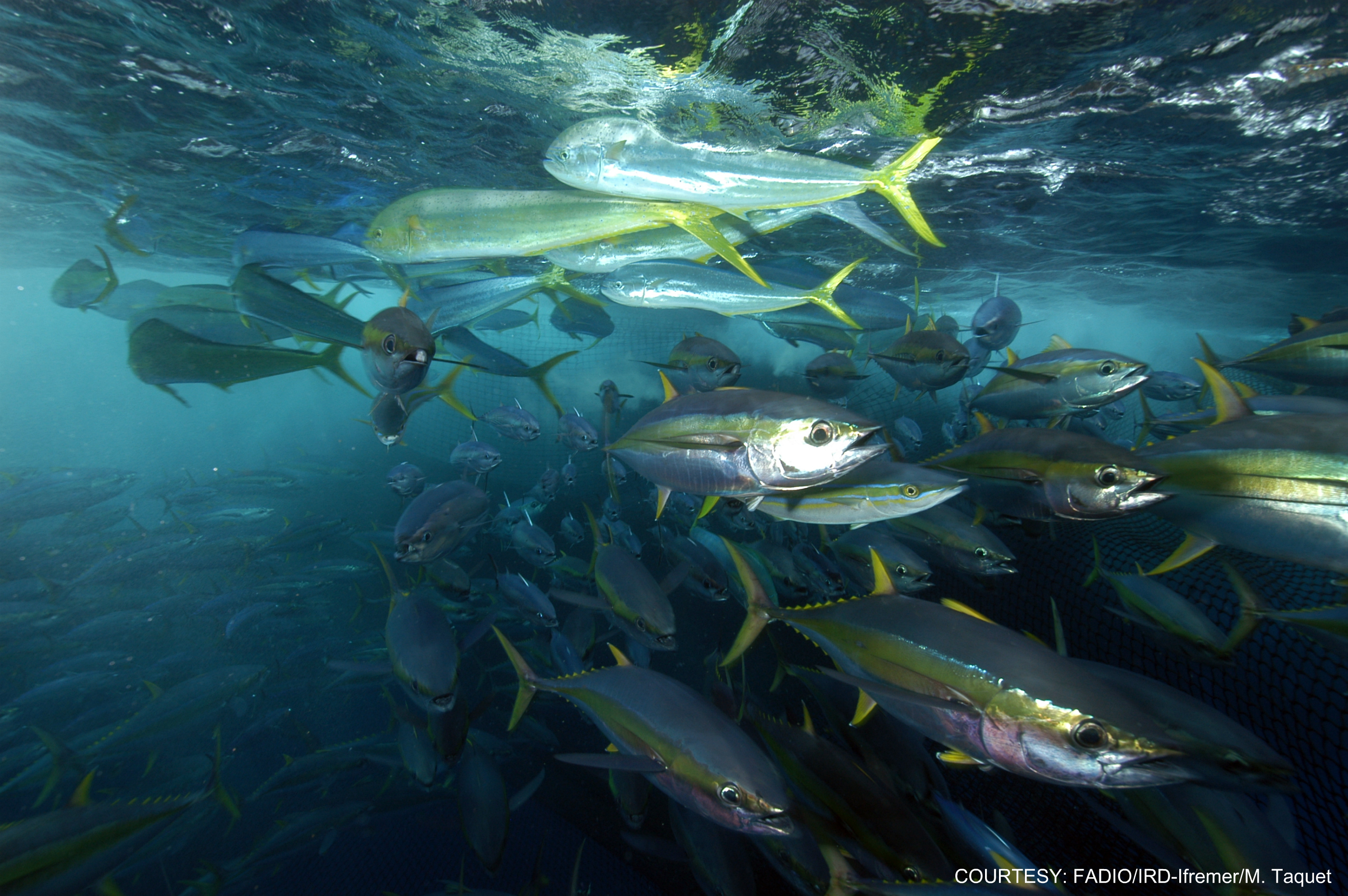
Setting a Course for Biodegradable FADs in the Pacific
Research and trials with fishers have helped make biodegradable fish aggregating devices (FADs) a practical option for tuna fleets.
In a Pacific Island Times op-ed, ISSF’s Holly Koehler and Dr. Gala Moreno urge the Western and Central Pacific Fisheries Commission (WCPFC) to set a transition timeline this December. They explain how tested designs, experience from other ocean regions, and technical support can help fleets prepare.
Advancing Tuna Conservation in the Western and Central Pacific
Ahead of WCPFC’s November 30–December 4 annual meeting, ISSF’s 2026 position statement outlines actions to strengthen tuna fisheries management.
Alongside a biodegradable FAD transition, ISSF urges progress on science-based harvest strategies, increased observer coverage on longline vessels, stronger transshipment oversight, and protections for sharks and other vulnerable species.
Read ISSF’s WCPFC Position Statement
DID YOU KNOW?
ISSF’s jelly-FAD design was inspired by the drift and buoyancy of jellyfish and developed with fishers. Thousands have been tested by fleets across the Atlantic, Indian, and Pacific Oceans, with trials continuing to assess their performance across different ocean conditions.
ISSF IN THE NEWS
Listen to podcast interviews with ISSF scientists and leaders on tuna sustainability, fisheries management, and ocean conservation — all collected on our new podcast page.