The International Seafood Sustainability Foundation (ISSF) today announced the release of the fourth edition of its Skippers’ Guidebook to Sustainable Purse Seine Fishing Practices — a comprehensive and practical resource for tuna fishers worldwide. The guidebook shares up-to-date ISSF recommendations on the steps purse-seine skippers can take to mitigate bycatch and protect non-target species and marine ecosystems in their fisheries.
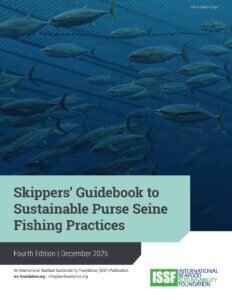
The new edition is available at issfguidebooks.org in Webpage format in English and as downloadable PDFs in English, Simplified Chinese, Traditional Chinese, French, Indonesian, Japanese, Korean, Spanish, Tagalog, and Vietnamese, ensuring broad accessibility across global tuna-fishing regions.
“The guidebook is the result of years of hands-on research and collaboration,” said Dr. Victor Restrepo, ISSF Vice President of Science and Chair of the Scientific Advisory Committee. “It draws on at-sea trials of bycatch mitigation techniques; testing of non-entangling, biodegradable fish aggregating devices; input from research institutes and environmental non-governmental organizations; and direct feedback from skippers through ISSF workshops. By bringing together science and real-world experience, we are equipping tuna fishers with practical tools they can use every day to reduce impacts and continuously improve the sustainability of their fisheries.”
What’s New in the Fourth Edition
Key updates in the approximately 75-page purse-seine guidebook include:
- Chapter 1: Sustainable Purse Seine Tuna Fisheries
- Information on the role and value of ISSF’s Vessels in Other Sustainability Initiatives (VOSI) tool for sustainable tuna sourcing
- Updates to ISSF Conservation Measures since the third edition
- Chapter 2: Fish Aggregating Devices (FADs)
- Expanded text and visuals on effective FAD management
- Updated guidance on FAD data collection and monitoring
- New insights into FAD structure impacts on marine animals and ecosystems
- Enhanced guidance on non-entangling and biodegradable FAD designs
- Chapter 3: Bycatch Mitigation and Handling
- Introduction of the bycatch mitigation “hierarchy,” outlining step-by-step actions before and during fishing to reduce bycatch
- New visuals of shark and ray species commonly encountered in purse-seine tuna fisheries
- Updated bycatch mitigation techniques to avoid the unintended capture of non-target species or enable safe handling and release — including shark release ramps and manta ray sorting grids collaboratively developed and tested by tuna fishers and ISSF scientists to safely return these vulnerable species to the water
- Research on use of acoustic discrimination equipment to improve gear selectivity
- Chapter 4: Fisheries Management
- Streamlined profiles of the five tuna Regional Fisheries Management Organizations (RFMOs) overseeing tuna fisheries worldwide
The guidebook features exclusive ISSF photographs and links to videos and related Web content.
“Our updated guidebook reflects ISSF’s longstanding commitment to turning science into action. Developed in collaboration with our science team, industry partners, and fisheries experts, it embodies our core approach — science-led innovation implemented at scale through collaboration and verification. By continually incorporating the latest research, evolving best practices, and RFMO requirements, we help ensure that sustainability progress is not only defined, but delivered,” said Susan Jackson, ISSF President.
Helping Purse-Seine Tuna Fishers Meet ISSF Conservation Measure Requirements
As a continuing-education resource for purse-seine tuna fishers, the guidebook helps to support seafood company and vessel compliance with ISSF Conservation Measure 3.4.
By reviewing the guidebook and completing its concluding form, skippers fulfill a bycatch education requirement for (1) ISSF Participating Companies and (2) purse-seine vessels listed on the ISSF ProActive Vessel Register — directly linking fishing best-practices capacity building with verified industry sustainability commitments.
The purse-seine guidebook is part of a broader ISSF suite of guides for other fishing gear types as well as tuna fishery observers:
- Longline skippers guidebook (third edition), available in multiple languages
- Purse-seine observers guide (first edition), in English, French, and Spanish
All guides can be found at issfguidebooks.org, which also offers species identification guides and other resources for tuna fishers.
Together, these materials form a cornerstone of ISSF’s global fisher-outreach program — which encompasses in-person skippers workshops, videos, and other downloadable materials such as bycatch mitigation infographics, posters, and construction guides for building more sustainable FADs.