Featured News
Updated ISSF Report Reviews Environmental Impacts and Mitigation Efforts in Tuna Fisheries
Report Examines Fishing Methods, RFMO Measures, and Evolving Best Practices
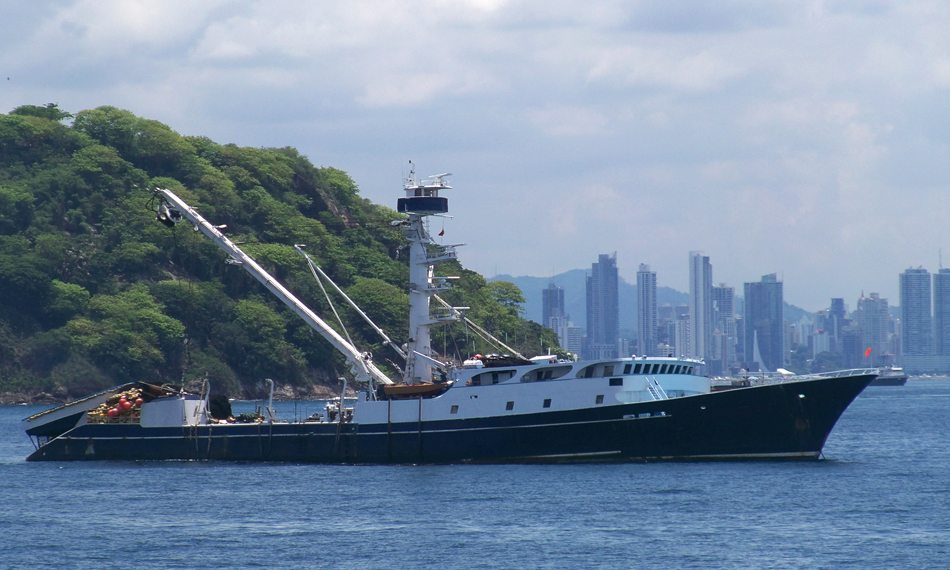
ISSF’s latest technical report provides an updated review of how different tuna fishing methods interact with non-tuna species and marine ecosystems, along with the measures being implemented to help reduce those impacts. The report also reviews scores from MSC-certified tuna fisheries alongside tuna RFMO conservation measures adopted through 2025 and ISSF conservation measures aimed at supporting continual improvement across global tuna fisheries.
Among the report’s findings:
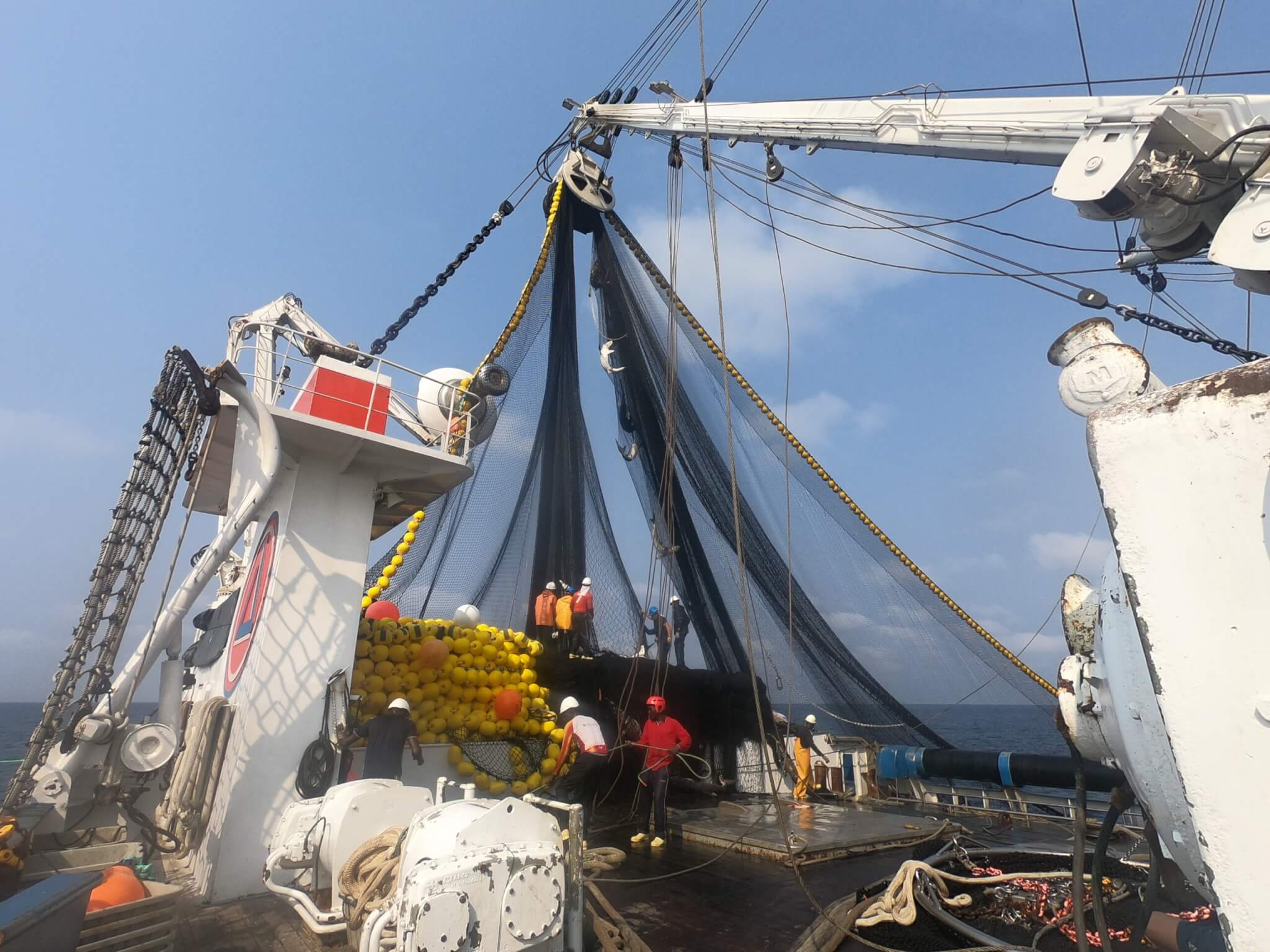
- Purse seine fisheries account for 66% of the global commercial tuna catch, underscoring the importance of large-scale mitigation efforts across global tuna fisheries.
- The report cites research estimating the global non-tuna catch rate in purse seine fisheries at approximately 1.4% relative to target tuna catch — or 0.92% when minor tunas and bonitos are excluded.
- Observer data reviewed in the report found sharks and rays combined represented less than 0.5% of total catch in purse seine FAD sets.
- All tropical tuna RFMOs now prohibit netting material in drifting FADs, while tuna fisheries continue expanding the use of non-entangling and biodegradable FAD designs to help reduce entanglement risks for sharks and sea turtles.
The report is part of ISSF’s ongoing work to compile and assess science-based information related to tuna fisheries, ecosystem impacts, and mitigation measures worldwide.
Featured Content
Updated Skippers’ Guidebook Supports Sustainable Purse-Seine Fishing Practices
4th Edition Incorporates New Mitigation Tools, FAD Guidance, and Practical At-Sea Resources
ISSF recently released the fourth edition of its Skippers’ Guidebook to Sustainable Purse Seine Fishing Practices, an updated resource designed to help tuna fishers apply science-based best practices at sea. Available in multiple languages, the guidebook provides practical guidance on reducing impacts on non-target species and marine ecosystems while supporting continual improvement across tuna fisheries.
New updates include:
- Expanded guidance on non-entangling and biodegradable FAD designs
- Updated bycatch mitigation techniques and safe-release practices for sharks and rays
- New visuals and tools to support species identification and handling
- Additional information on FAD monitoring, data collection, and ecosystem impacts
- Streamlined overviews of the five tuna RFMOs and updated ISSF Conservation Measures
The guidebook draws on at-sea trials, fisher feedback, scientific research, and collaborative testing of mitigation tools — including shark release ramps and manta ray sorting grids developed with tuna fishers and ISSF scientists.
As part of ISSF’s global fisher-outreach program, the guidebook also supports requirements tied to ISSF conservation measures and the ProActive Vessel Register (PVR).
ICYMI
IOTC Advances Several Monitoring and Bycatch Priorities While Tuna Conservation Challenges Remain
As the Indian Ocean Tuna Commission (IOTC) annual meeting concludes, ISSF welcomes several constructive outcomes for Indian Ocean tuna fisheries, particularly on bycatch mitigation, transshipment oversight, and continued investment in science-based management procedures. However, ISSF remains concerned that the adopted yellowfin tuna measure does not fully align with IOTC Scientific Committee advice.
ISSF in the News
Nina Rosen Joins ISSF Environmental Stakeholder Committee
Fish Focus