When the Indian Ocean Tuna Commission (IOTC) convenes this May, it will be to meet and make policy decisions after a period of tangible progress. Recent outcomes, like strengthened FAD management and the adoption of management procedures (also known as harvest strategies) for some key stocks, show what can be achieved when IOTC members translate science-based recommendations into action.
The focus now shifts to making progress on additional sustainability priorities for Indian Ocean tuna fisheries management. As detailed in the ISSF 2026 position statement, two priorities stand out: (1) reinforcing tuna stock conservation through effective management procedures, and (2) strengthening bycatch mitigation alongside the monitoring needed to support it.
Reinforcing Tuna Stock Conservation and Management Procedures
Management procedures are designed to guard fisheries managers against short-term decision-making and to instead follow pre-agreed, science-based rules. IOTC has made progress in this space, particularly on procedures for skipjack and bigeye. The immediate challenge is ensuring these harvest frameworks are indeed implemented — and function as intended.
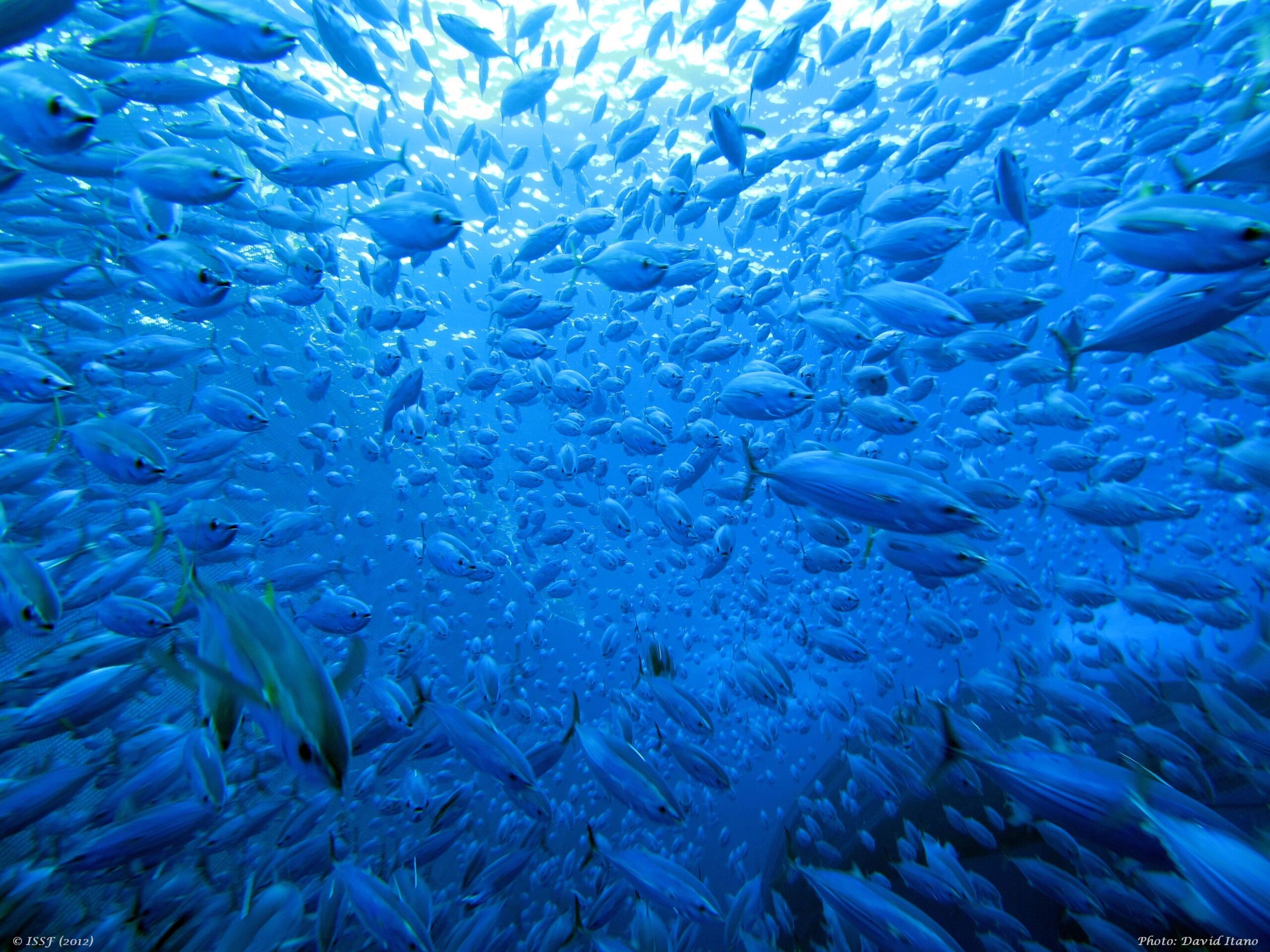
Recent catch trends underscore this need. For both skipjack and bigeye, catches actually have exceeded agreed limits in prior years. When this happens, the credibility and effectiveness of management procedures are weakened. To maintain both stock health and confidence in the system, catch limits derived from management procedures must be fully activated in tandem with measures to prevent actual catches from exceeding those limits.
Yellowfin requires particular attention. Current scientific advice indicates the stock is not overfished and not experiencing overfishing. Maintaining that status will require sustained management discipline and compliance. ISSF is urging the Commission to adopt a total allowable catch (TAC) for 2026-2028 that does not exceed the level recommended by its Scientific Committee, and to ensure that this limit is respected in practice. Catch levels above that range introduce a clear risk of reversing recent gains.
There is also unfinished work on management procedures. Progress on yellowfin and albacore management procedures has been slower than needed, with funding and technical work still outstanding. Advancing these processes — including securing resources for management strategy evaluation and adopting permanent reference points — would lay the foundation for adopting management procedures for these two tuna stocks in the near term, further strengthening the Commission’s overall tuna management framework.
ISSF urges IOTC to secure funding for yellowfin and albacore work at this year’s meeting to accelerate the development of management procedures for both stocks.
Strengthening Bycatch Mitigation — Supported by Better Monitoring
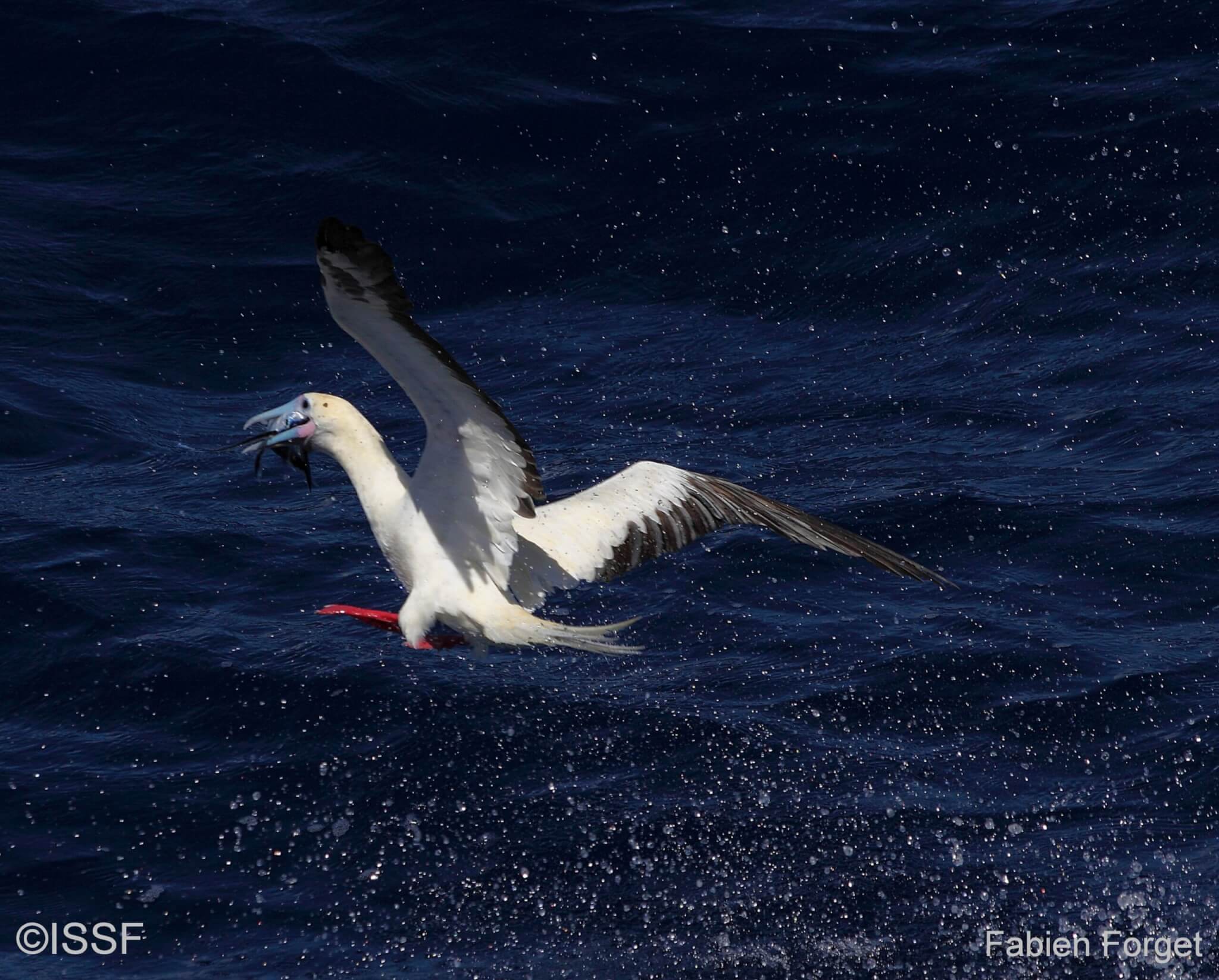
Mitigating and reducing bycatch remains central to protecting ocean ecosystems. Sharks, rays, seabirds, cetaceans, and sea turtles continue to face pressure in the Indian Ocean, and existing mitigation measures do not yet reflect the full suite of current best practices.
ISSF is calling for targeted updates across several areas: requiring sharks to be landed with fins naturally attached without exceptions or alternatives; updating safe handling-and-release best practices for vulnerable species — especially for mobulids this year; and modernizing seabird and sea turtle measures in line with the latest scientific guidance.
The effectiveness of any bycatch measure depends on monitoring and reliable data. Without independent verification, it is difficult to assess compliance and effectiveness or understand the scale of interactions with non-target species. Yet observer coverage in the IOTC area remains far behind other tuna RFMOs, with minimum requirements set at just 5%. Increasing that level is a necessary and overdue step. ISSF is urging the Commission to adopt measures to begin increasing observer coverage, using both human observers and electronic monitoring (EM), from the current, inadequate 5% level towards 100%.
EM offers a practical route to scale coverage, improve data quality, and strengthen oversight across fleets. The tools are already available. Expanding their use would support not only monitoring effective bycatch mitigation but also broader compliance and fisheries management objectives.
Maintaining Momentum for Sustainability Improvements
IOTC’s advances in recent years demonstrate that consistent and forward-looking action can deliver measurable improvements. Sustaining that momentum requires follow-through — ensuring that agreed-upon measures are implemented and complied with; that management frameworks are completed; and that monitoring systems provide the transparency and data needed for accountability and scientific analyses.
ISSF will continue to work with Commission members and stakeholders to advance practical, science-based solutions. The path forward is clear: Align catch limits with scientific advice; complete the work needed to adopt additional management procedures; strengthen bycatch mitigation; and put in place the monitoring tools needed to make these measures effective.