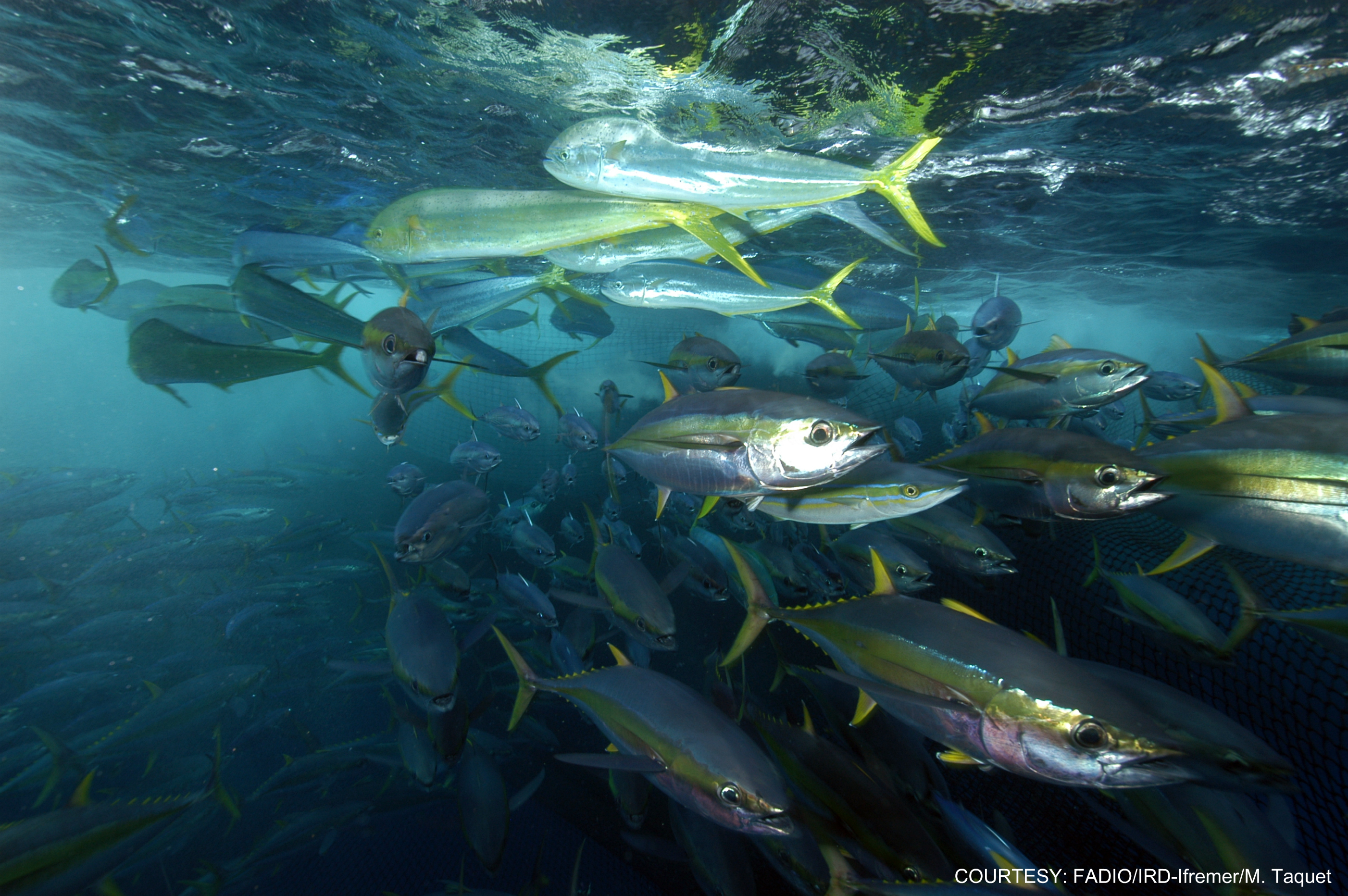
When the Inter-American Tropical Tuna Commission (IATTC) meets in late August, delegates will have an opportunity to turn recent advances in fisheries science and management into stronger conservation and management measures for Eastern Pacific tuna fisheries.
Over the past several years, IATTC has advanced management strategy evaluation (MSE) work for tropical tunas, adopted interim electronic monitoring (EM) standards, begun transitioning to fully biodegradable fish aggregating devices (FADs), and strengthened its compliance assessment process. The Commission’s latest scientific advice also indicates that bigeye, yellowfin, and skipjack tuna stocks in the eastern Pacific Ocean remain in healthy condition.
These advances provide a strong foundation, but additional action is needed to effectively manage tuna fisheries and their ecosystems. ISSF’s 2026 position statement highlights three priorities that can help IATTC continue making progress.
Advance Science-Based Tuna Management
IATTC has reached an important milestone in its work to modernize tuna management. This year, the Commission’s scientific staff completed a management strategy evaluation for bigeye tuna and identified harvest control rules capable of meeting agreed management objectives while maintaining healthy tropical tuna stocks. The Commission also continues to advance harvest strategy development for other target species.
ISSF is encouraging IATTC to build on that progress by adopting a management procedure that reflects the recommendations of the scientific staff and implements any reduction in fishing closures gradually. Maintaining the Individual Vessel Limit (IVT) measure and supporting the Integrated Port Sampling Program (IPSP) will also help provide the scientific information needed to manage tropical tuna fisheries effectively. In addition, improving longline operational data reporting will strengthen future stock assessments and scientific advice.
Management procedures are designed to provide predictable, science-based decision-making that responds to changing stock conditions while reducing uncertainty. Continued investment in these tools, including for Pacific bluefin tuna and South Pacific albacore, will help ensure that fisheries management keeps pace with both scientific knowledge and changing ocean conditions.
Strengthen Monitoring, Transparency, and Accountability
Effective fisheries management depends on reliable information and transparent implementation.
Although IATTC has adopted interim EM standards for both purse seine and longline fisheries, significant monitoring gaps remain. Observer coverage requirements for longline fisheries remain well below the levels needed to support robust scientific analyses, and there is currently no observer coverage requirement for smaller purse seine vessels. Electronic logbooks also offer an opportunity to improve the timeliness, consistency and quality of fisheries data.
ISSF is urging the Commission to begin increasing observer coverage — using human observers, electronic monitoring, or both — while implementing harmonized electronic logbooks for longline vessels. These measures would strengthen scientific assessments, improve compliance monitoring, and increase confidence in fisheries data.
The Commission also has an opportunity to continue strengthening its compliance assessment process by adopting clearer approaches for evaluating non-compliance and identifying follow-up actions. Transparent compliance processes help ensure that agreed conservation and management measures are implemented consistently across the Convention Area.
Strengthen FAD Management While Implementing Current Science for Ecosystem Protection
Fish aggregating devices (FAD) remain an important component of tropical tuna fisheries, and effective FAD management requires more than any single measure.
IATTC has already taken important steps by beginning the transition to fully biodegradable FADs. Building on that progress will require complementary measures that improve monitoring, accountability, and fisheries science throughout the operational life of FADs. ISSF is encouraging the Commission to strengthen reporting of FAD deactivation events, improve FAD marking and ownership requirements, establish a harmonized FAD register, and expand the use of echosounder buoy data to strengthen scientific understanding and fisheries management. Together, these measures improve FAD traceability, support better data collection, and help reduce the impacts of lost or abandoned FADs on the marine ecosystem.
Additional work is also needed to ensure that conservation measures for sharks, seabirds, and sea turtles reflect current scientific knowledge. ISSF is again urging IATTC to strengthen shark conservation by requiring sharks to be landed with fins naturally attached and incorporating updated safe handling and release practices. The Commission must also modernize its seabird and sea turtle measures to reflect the latest scientific recommendations and best practices for bycatch mitigation. These combined actions would strengthen protections for sensitive species while supporting healthier tuna fisheries over the long term.
IATTC has made important progress toward more sustainable tuna fisheries management. Continuing that progress will require translating scientific advice into effective management measures, strengthening monitoring and accountability, and ensuring conservation measures keep pace with the current scientific knowledge and identified best practices. By taking these steps, the Commission can continue advancing the long-term stewardship of Eastern Pacific tuna fisheries and the ecosystems that support them.