Tuna Sustainability in Focus: Milan and Paris Market Forums
ISSF’s October market forums in Milan and Paris explored tuna sustainability progress, remaining challenges, and practical transparency and accountability tools.
Contributions from the Marine Stewardship Council (MSC), Sustainable Fisheries Partnership, and the Institut de recherche pour le développement (IRD) complemented ISSF presentations on fisheries management, improved fishing practices, and verification of vessel commitments — supporting informed discussions among market stakeholders and their sustainability partners.
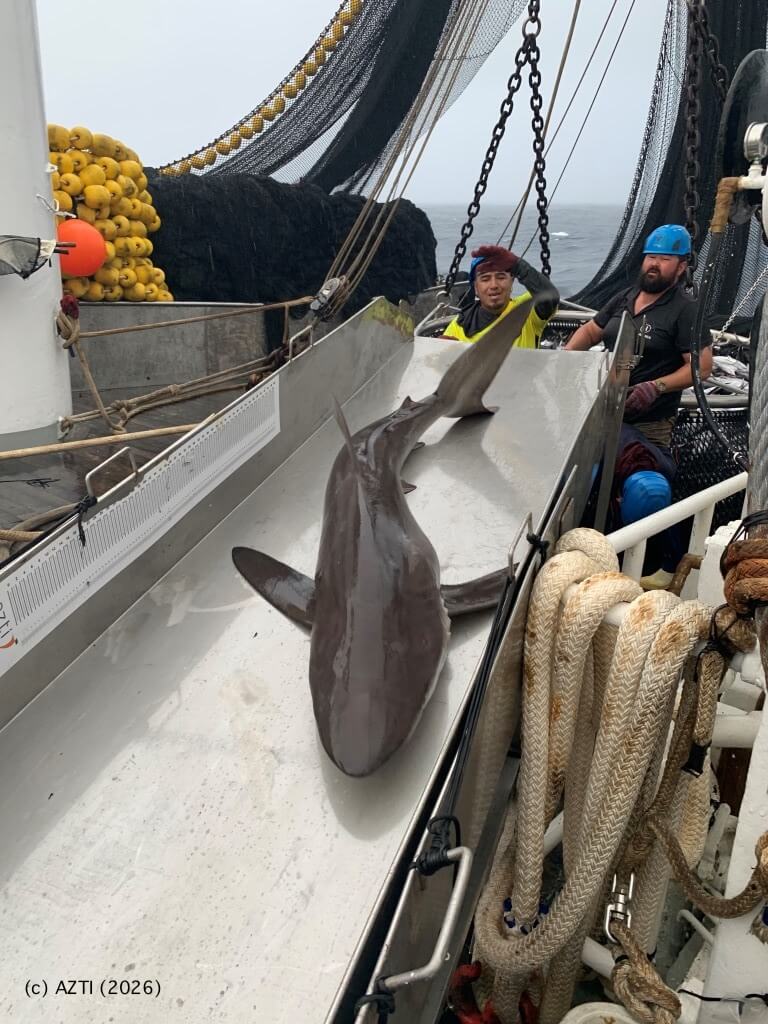
Bycatch Mitigation Innovation: The Shark Release Ramp
Maximizing the survival of sharks accidentally caught by tuna fishers requires skillful release to limit handling and time out of water. Our Shark Release Ramp Guide for Purse-Seine Vessels shows how to custom-build durable, affordable “water slides” for safely and quickly returning sharks to sea.
Authored by ISSF and AZTI scientists based on fisher collaborations, the guide is available in nine languages.
DID YOU KNOW?
Fisheries managers can agree in advance on how to adjust fishing limits as tuna stock conditions change. Management procedures — also called harvest strategies — use science-based rules to make those decisions more predictable and support long-term stock health. ISSF supports their development and adoption through scientific research and advocacy at tuna regional fisheries management organizations.
Learn more about management procedures
ISSF IN THE NEWS
ISSF urges stronger tuna catch limits, monitoring ahead of ICCAT meeting
Undercurrent News
The International Seafood Sustainability Foundation (ISSF) has urged the International Commission for the Conservation of Atlantic Tunas (ICCAT) to strengthen tuna catch limits, increase fishing vessel monitoring and improve protections for sharks and seabirds at its annual meeting on Nov. 16-23.
It’s time for WCPFC to commit to a biodegradable FAD transition
Islands Business News
The science is clear. Solutions exist. And resources are within reach. Non-entangling and biodegradable fish aggregating devices (bio-FADs) — made from bamboo, hemp, cotton, and other organic materials — offer a sustainable, effective alternative to conventional drifting FADs.