Fishers know that tunas are attracted to floating objects in the ocean. “Fish aggregating devices” (FADs) include natural floating objects (such as logs) as well as human-made floating objects. FADs vary in materials and design from region to region and fleet to fleet.
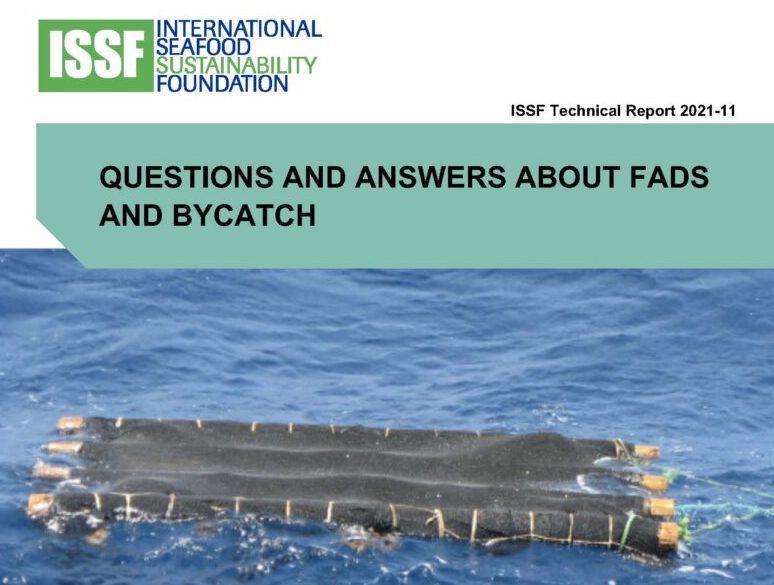
Fishing with FADs is an efficient method for catching tuna, used primarily by purse-seine vessels and sometimes by pole‑and‑line vessels. FADs can be anchored to the ocean floor or set to drift in the open ocean. They consist of floating surface structures (rafts) and submerged structures (tails).
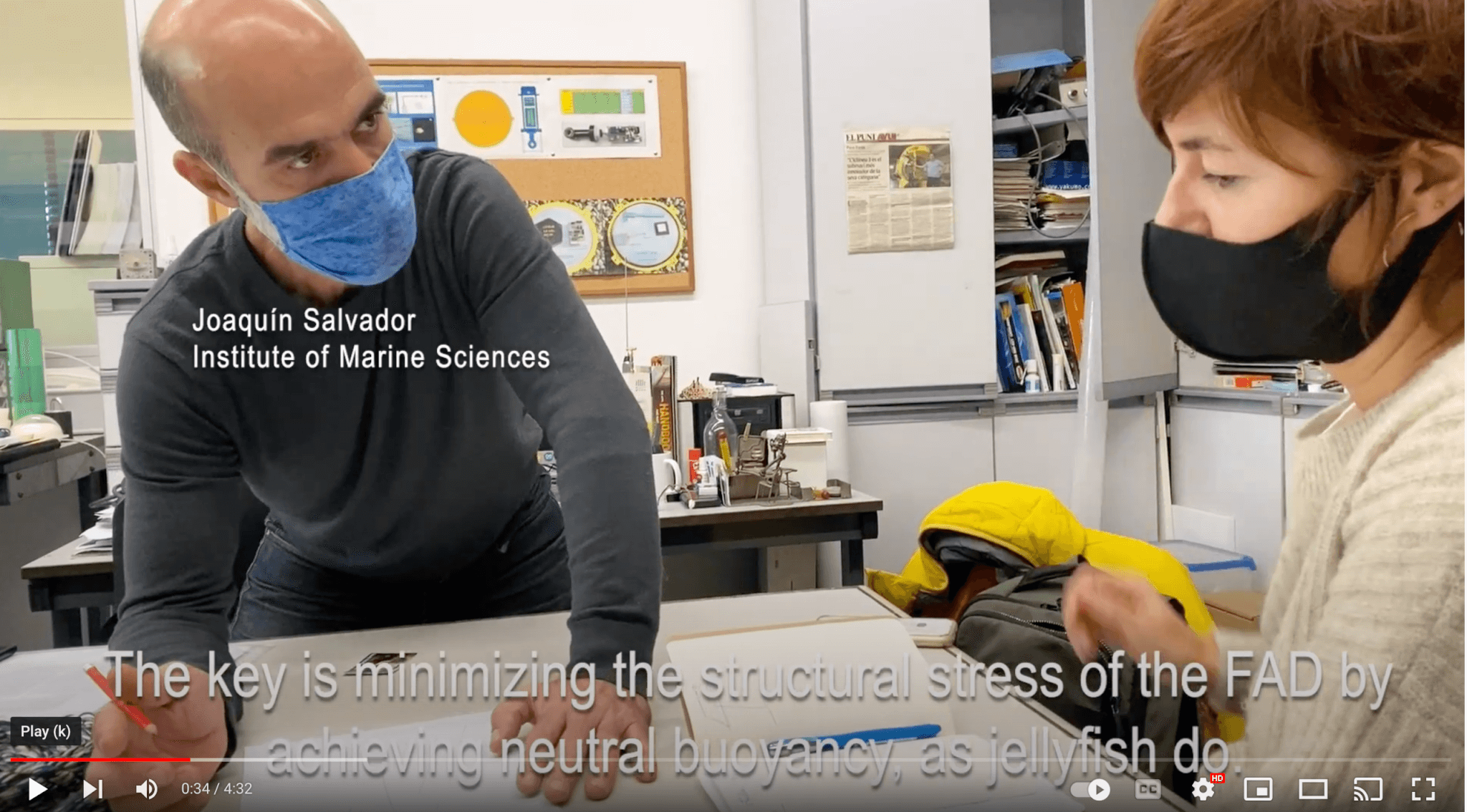
In recent decades, commercial-fleet FADs have become larger and more sophisticated, and often are equipped with tracking technology that allows vessel crew to remotely monitor fish at FAD locations. Our new jelly-FAD model is a more streamlined, lighter FAD design that avoids netting and is built with biodegradable materials.

Award-Winning Innovation
ISSF’s biodegradable and non-entangling jelly-FAD design received the Global Seafood Alliance’s 2025 Responsible Seafood Innovation Award in the Fisheries category.
FAD DESIGNS & MATERIALS
Traditional FADs
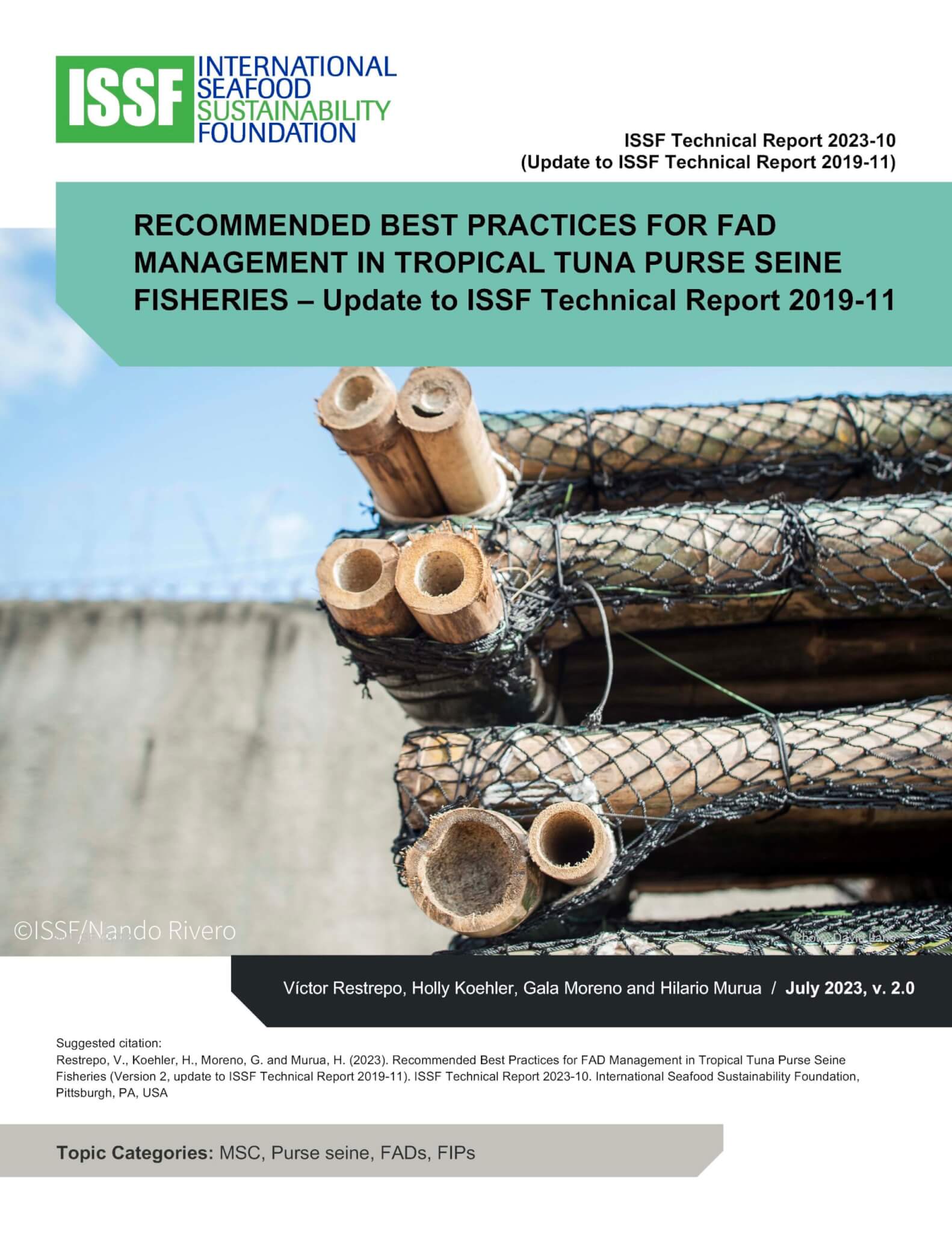
FADs with netting on their rafts and tails can unintentionally ensnare vulnerable, non-target species like sharks and sea turtles. Even after fishing operations have ended, discarded FAD netting that floats or sinks in the ocean can still cause entanglement through “ghost fishing.”
The larger the net mesh size, the higher the entanglement risk. FADs with netting are classified as lower entanglement risk (LERFADs) or higher entanglement risk (HERFADs).
When they are lost or abandoned, conventional FADs constructed with plastic, metal, or other industrial components can damage marine environments and coastal areas. ISSF researches FAD retrieval best practices for fleets.
Non-Entangling FADs
We published the first ISSF fisher guide to building non-entangling FADs in 2015. It was updated in 2019 to cover FAD designs that also are biodegradable.
Today, four tuna RFMOs require purse-seine fleets in their region that fish with FADs to use only non-entangling FAD (NEFAD) designs.
Only FADs without netting on the surface and submerged structures can be considered fully “non-entangling.” ISSF Conservation Measure 3.5 requires our participating seafood companies to conduct transactions only with those purse seine vessels whose owners have a public policy regarding the use of only non-entangling FADs.
In ISSF Skippers Workshops, we tracked vessel crew views on switching from traditional FADs to non-entangling FADs to reduce bycatch in their fisheries, and noted growing acceptance of non-entangling designs over time.
Non-Entangling & Biodegradable FADs
FADs that do not have netting and are made with natural materials pose the lowest risk among FAD types to both marine animals (bycatch) and environments (ecosystem impacts).
Three of the tropical-tuna RFMOs now require their fleets to use biodegradable materials in their FADs, and multi-year transition plans to bio-FADs are underway.
To develop and promote the adoption of more sustainable FADs, ISSF fisheries scientists have collaborated with skippers to brainstorm designs and test the durability of biodegradable materials.
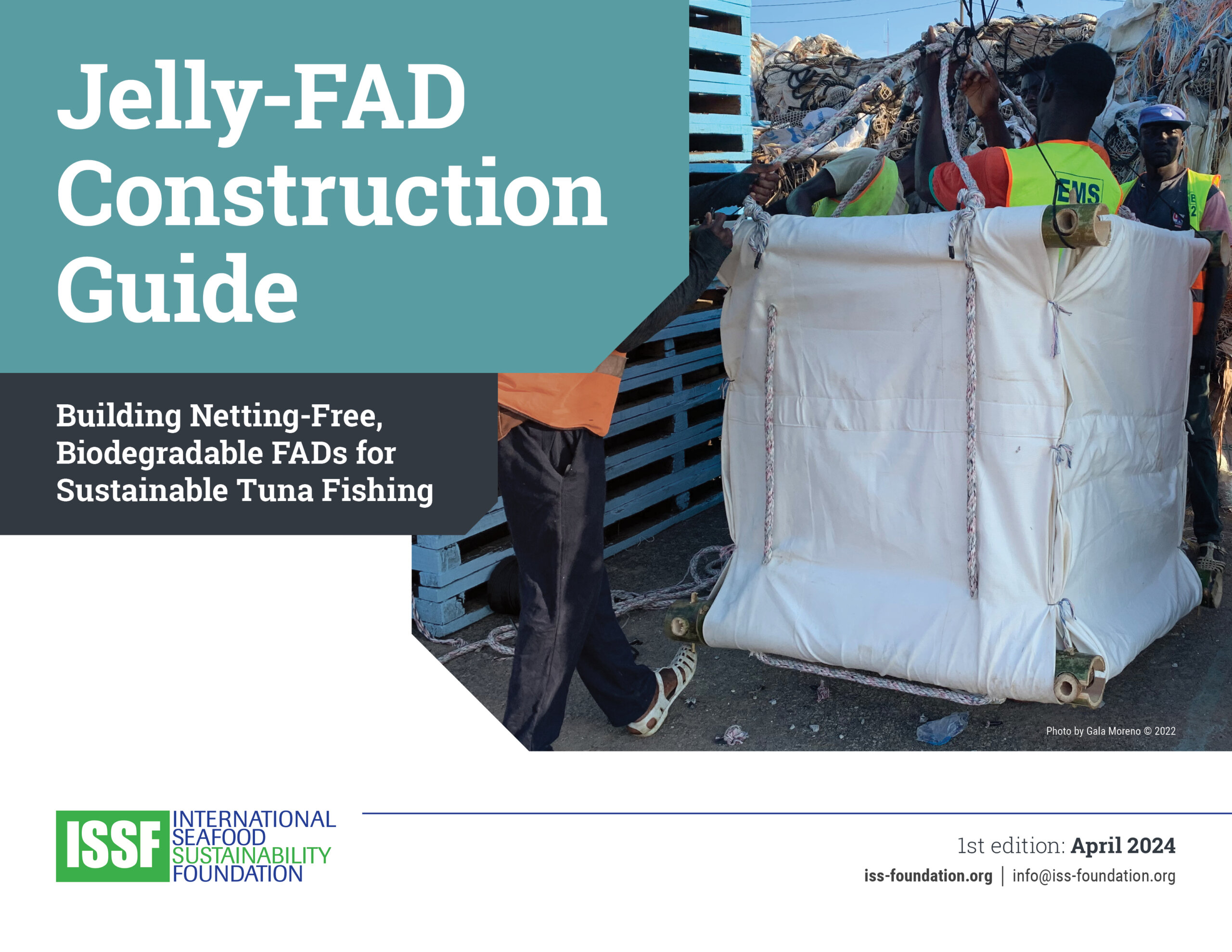
We believe our non-entangling and biodegradable jelly-FAD —build with bamboo, cotton, and other natural materials —is the most sustainable FAD design to date. Our Jelly-FAD Construction Guide was published in 2024.
RELATED RESOURCES








Fisher Best-Practices Resources
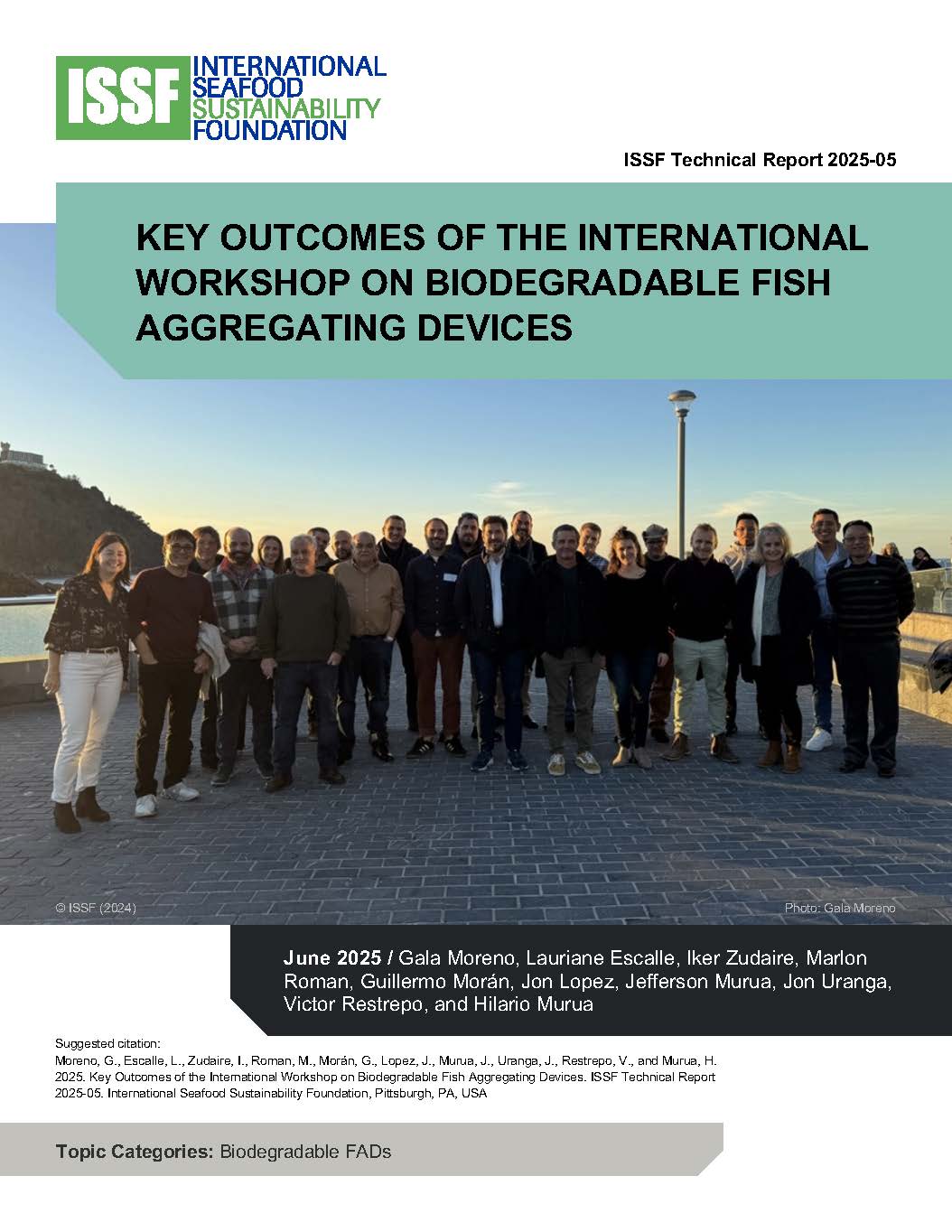
In addition to advocating best practices in fisheries management to RFMOs — through reports, snapshots, and other materials — ISSF develops best-practices resources for fishers, including skippers workshops and guidebooks and an illustrated guide for building Fish Aggregating Devices (FADs) that are both non-entangling and biodegradable.